



The Garden
The Birthplace of the French Formal Garden
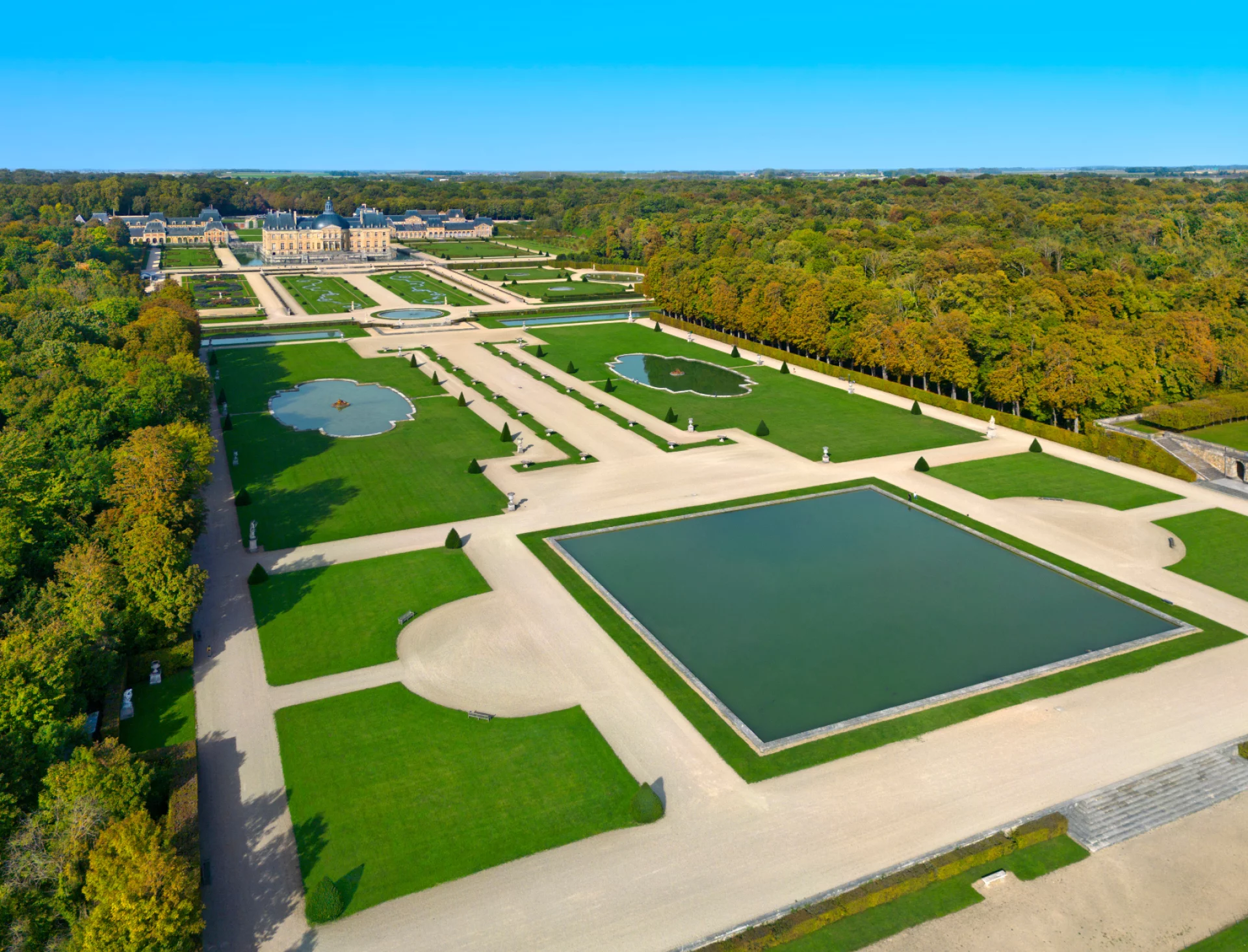
Vaux-le-Vicomte is the birthplace of the formal French garden. With its theatrical grandeur, perfectly geometric design, and masterful use of perspective, this creation established a new language of landscape architecture that would be echoed across Europe. Thanks to Nicolas Fouquet, André Le Nôtre had, from 1641, the opportunity to fully showcase his genius. For the first time on such a scale, he unified all the technical, scientific, and artistic knowledge of his time in one visionary design.
The Birthplace of the French Formal Garden
The garden at Vaux-le-Vicomte is centered on a brilliantly executed perspective stretching over three kilometers. Le Nôtre and Le Vau created the most harmonious fusion of architecture and landscape of the 17th century across 33 hectares carved from nature. With its bold layout, abundant water features and surprises, and majestic sense of theater, Vaux’s garden became the founding masterpiece of a new art form. It remains an invitation to knowledge, imagination, and pleasure.
Exploring the Garden
A permanent exhibition and a large audiovisual model (in the château’s basement) reveal the genius of Le Nôtre and the key steps in the garden’s creation. Outside, two walking trails offer different perspectives on the design’s complexity.
In 2019, the estate replaced the boxwood in the bowling green parterres with a temporary artwork: The Ephemeral Ribbons.
Inspired by Achille Duchêne’s arabesque patterns from the early 20th century (themselves based on Le Nôtre’s embroidery-style designs), The Ephemeral Ribbons feature 390 tilted aluminum plates, each unique in shape, size, and angle. The aluminum adds energy and movement, while reflecting the sky like the garden’s pools.
The artwork is designed to be ever-changing—like a living video, it never appears the same twice.
« Reintroducing the arabesque was obvious. It is both the origin and the DNA of the garden—but also the problem, since the dying boxwoods are what led to this contemporary artwork. » – artist Patrick Hourcade explains
Fountains, statues et flower parterre
Fountains and Water Features
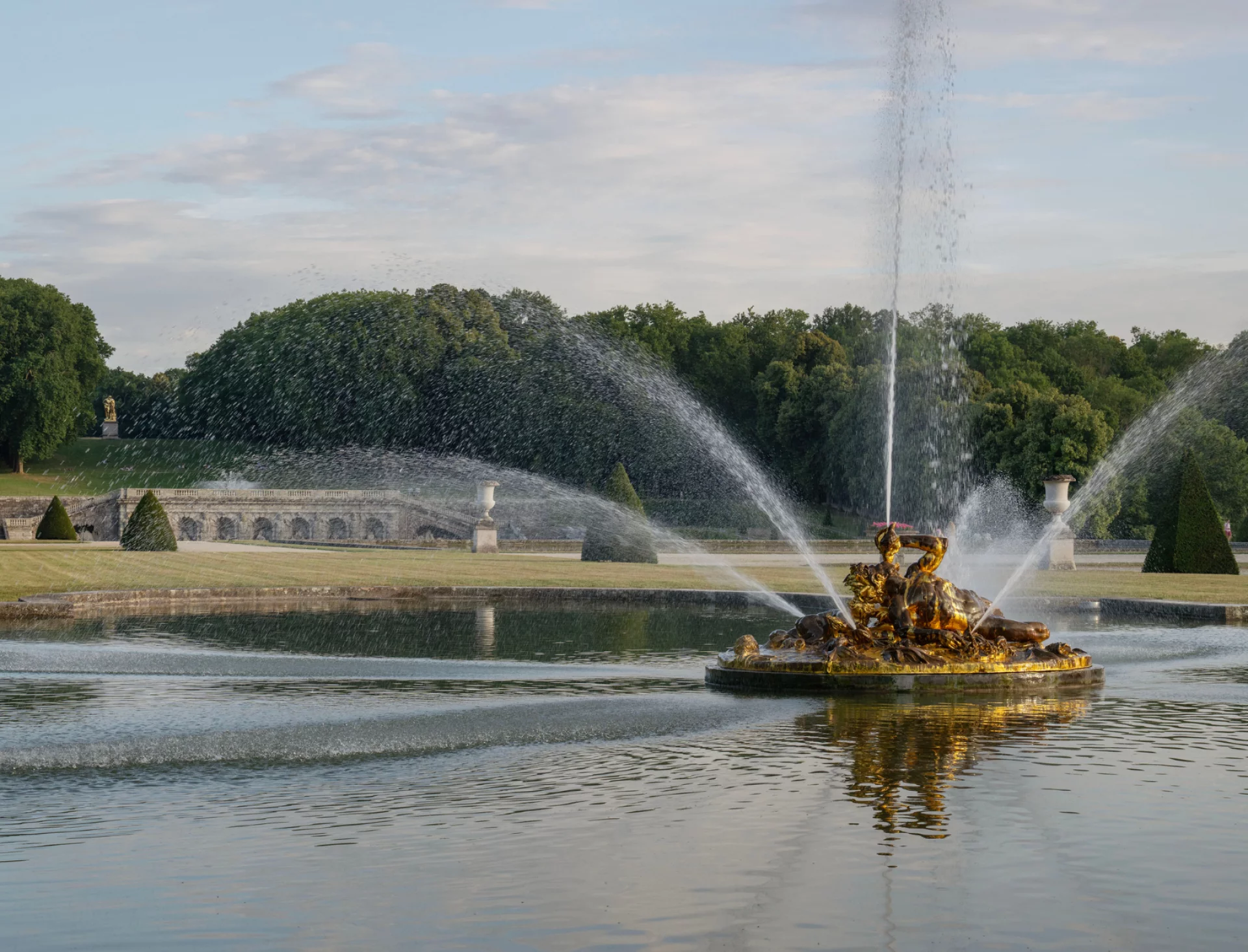
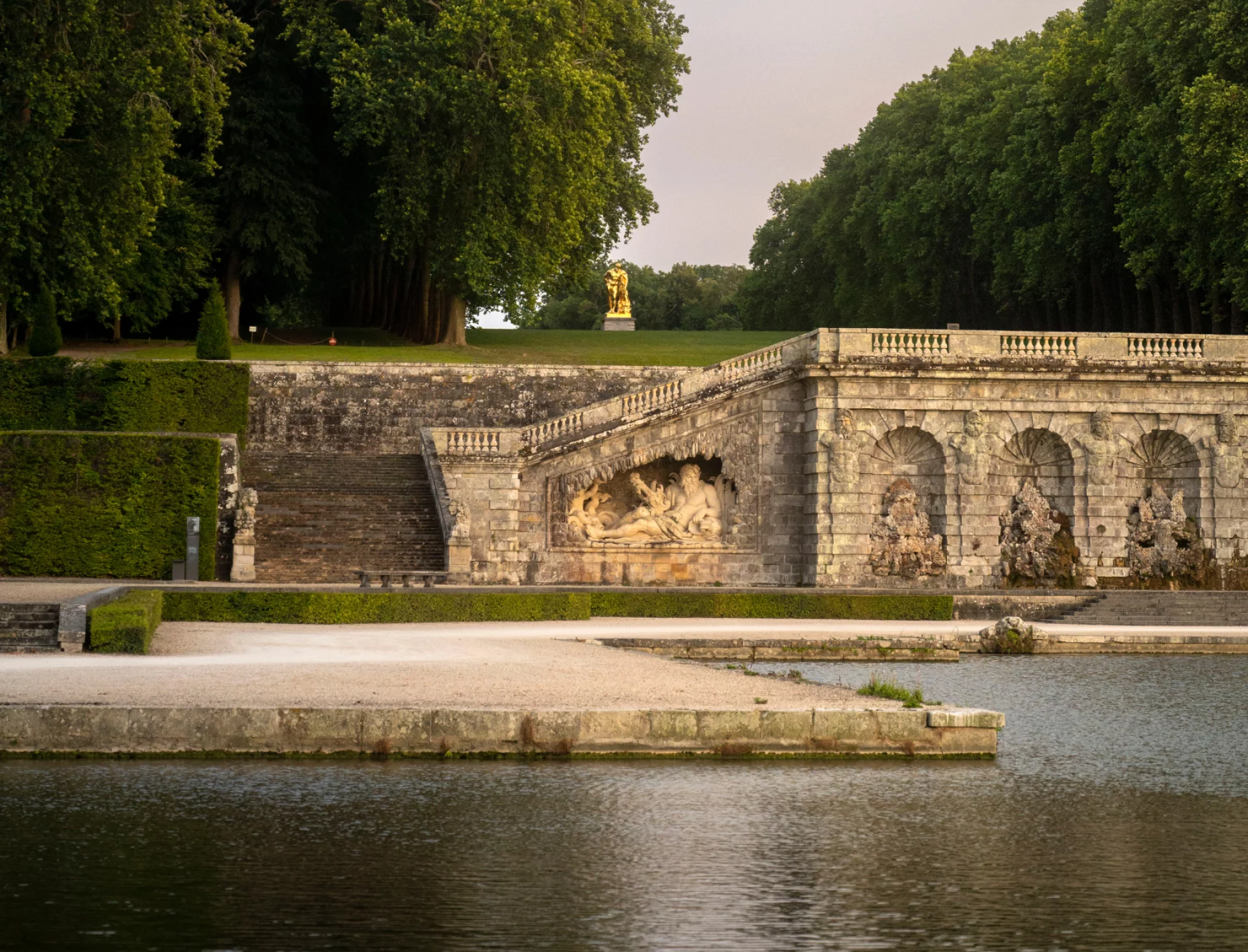
André Le Nôtre, creator of the French garden, was inspired by the Italian Renaissance and gave pride of place to water in all its forms. Whether cascading, still, or bursting from fountains, water accompanies visitors at every step through the garden, offering refreshment and beauty. Did you know? The estate’s hydraulic system still works by gravity alone—just as it did in the 17th century!
Statues
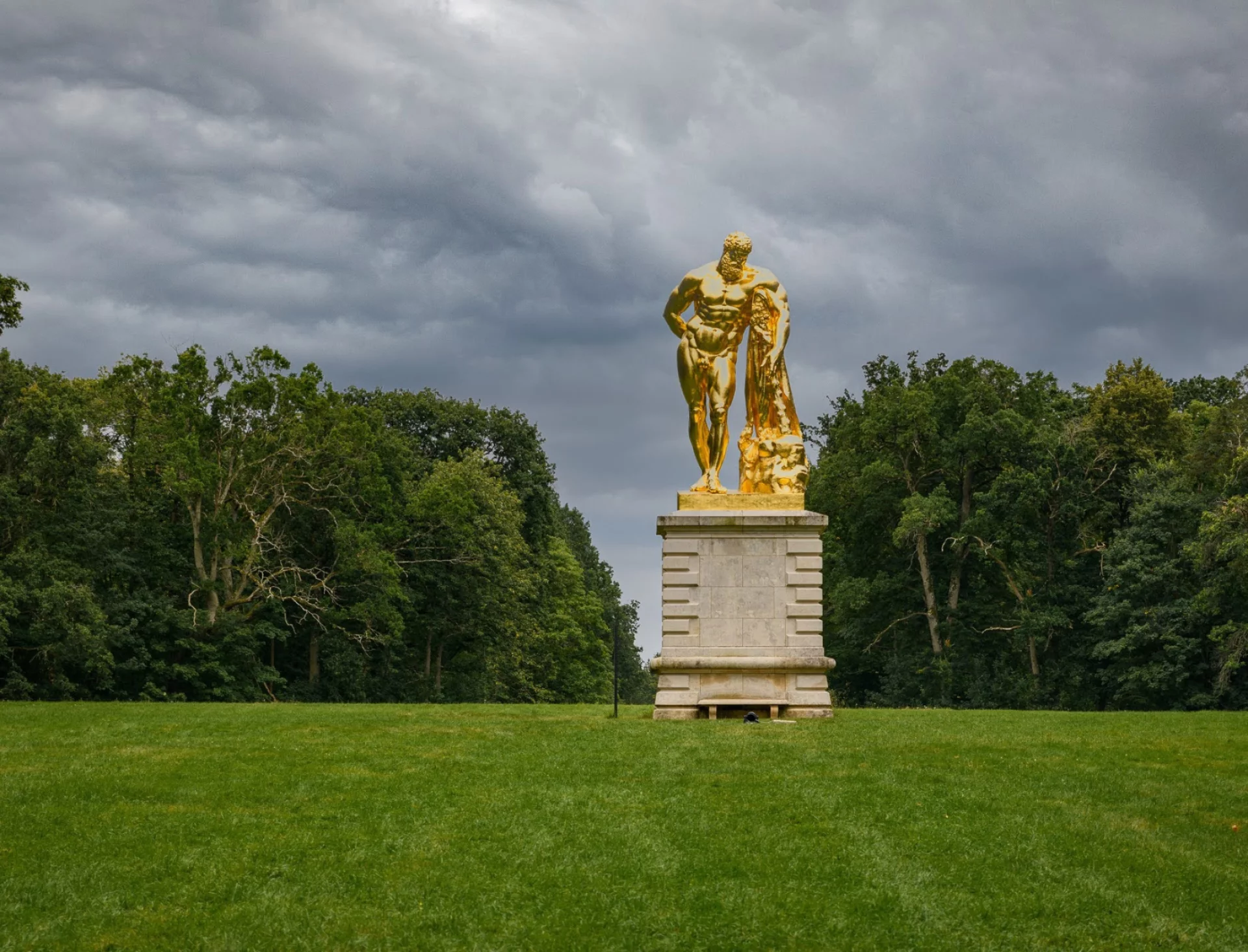
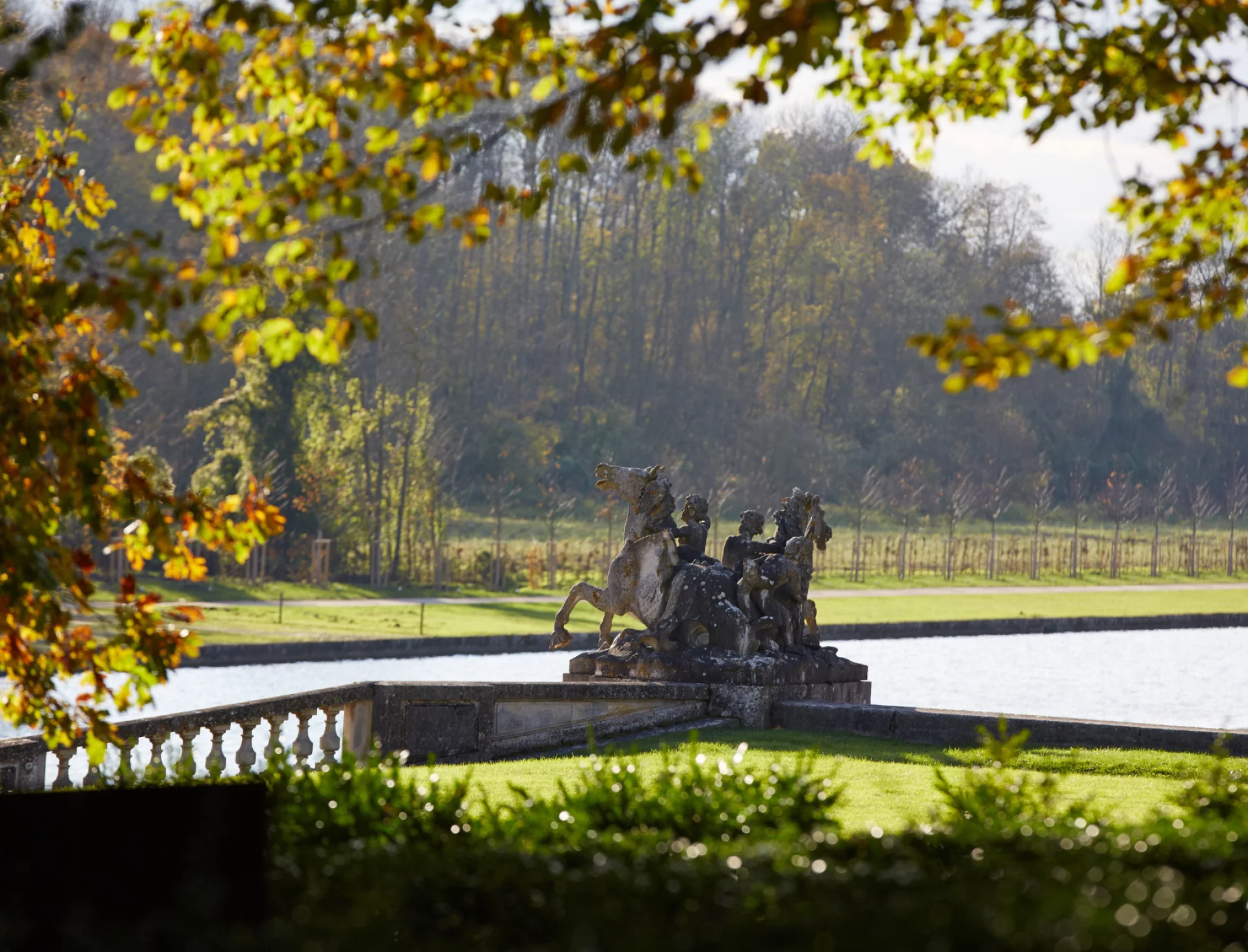
An enlightened patron and bold visionary, Nicolas Fouquet commissioned the best sculptors of his day: Michel Anguier, Philippe de Buyster, François Girardon, Mathieu Lespagnandel, Thibaut Poissant… Today, the garden is home to sixty-three sculptures from the 17th and 19th centuries.Michel Anguier, Philippe de Buyster, François Girardon, Mathieu Lespagnandel, Thibaut Poissant…
« Look closely and you’ll see them come alive—these expressive figures are the only true witnesses to centuries gone by. » — Alexandre de Vogüé, co-owner of the Château
As you stroll through the gardens, take the time to admire each work in stone or marble—they may just reveal their stories to you.
Optical Illusions and Surprises
Drawing on the latest scientific discoveries and a modern sensibility, Le Nôtre created a design that is both rigorous and full of variety. Trompe-l’œil effects, visual illusions, and unexpected revelations are scattered throughout the garden, delighting and surprising visitors at every turn. The garden of Vaux-le-Vicomte is best appreciated as a journey of discovery—one step at a time.
The Flower Parterre
This is one of the most iconic parterres in the garden, designed by Le Nôtre at Fouquet’s request. Its very existence continues to puzzle historians: because of their fleeting nature, flowers were rarely used in formal French gardens. Yet this immense floral arrangement blooms directly beneath the windows of Fouquet’s ceremonial apartment.
Each year, the head gardener at Vaux-le-Vicomte designs a new version of the parterre and selects the finest flower varieties to bring a fresh burst of color and fragrance from May through October.
The Park
The park of Vaux-le-Vicomte spans 500 hectares, enclosed by a 13-kilometer wall. Come explore a lesser-known side of the estate through its fountains, water features, forests, and alleys—a refreshing experience filled with countless discoveries!
« The King had every reason to be furious: he was at Vaux-le-Vicomte, facing the pinnacle of the French formal garden. » Alain Baraton, Chief Gardener at the Château de Versailles