



Famous figures
Nicolas Fouquet
The Visionary Builder of Vaux-le-Vicomte
A brilliant statesman, enlightened patron, and passionate lover of the arts, Nicolas Fouquet (1615–1680) was the founding spirit of Vaux-le-Vicomte.
Born into a wealthy family of parliamentarians, Fouquet was intelligent, daring, and fiercely loyal to the crown — qualities that fueled his meteoric rise. His generosity — at times strategic — and his gallant character charmed the court and reinforced his influence.
True to his family’s emblem, the squirrel, and his motto “Quo non ascendet?” (“To what heights may he not rise?”), Fouquet climbed the ranks of power until he was appointed Superintendent of Finances in 1653 by Cardinal Mazarin, the King’s Chief Minister. At just 35, he became one of the most powerful men in the kingdom. Tasked with replenishing the royal treasury, he worked closely with Jean-Baptiste Colbert, Mazarin’s personal steward.
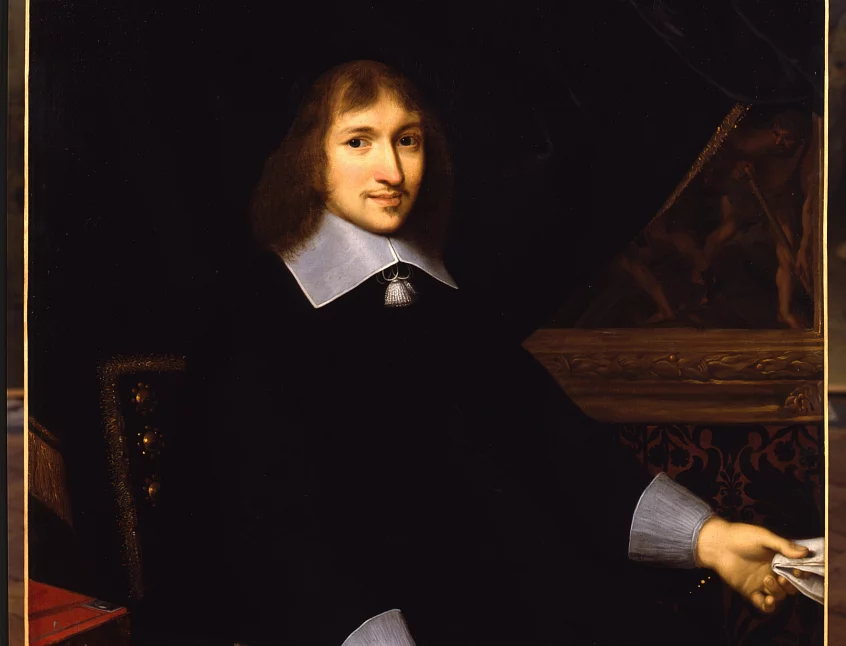
Portrait of Nicolas Fouquet
A visionary, Fouquet imagined a residence worthy of his prestige. He entrusted the creation of Vaux-le-Vicomte to the greatest talents of his time: architect Louis Le Vau, painter-decorator Charles Le Brun, and landscape designer André Le Nôtre. For the first time in history, these three masters collaborated on a unified project — a revolution that would lay the groundwork for French classicism.
When Mazarin died in March 1661, Fouquet was seen as his natural successor. But Louis XIV, then 22 years old, chose to rule alone and abolished the role of Chief Minister. Colbert, driven by jealousy and ambition, seized the opportunity to accuse Fouquet of embezzling millions — funds actually taken by Mazarin — in a calculated attempt to tarnish his image in the King’s eyes.
Despite warnings from his inner circle, Fouquet remained unsuspecting. On August 17, 1661, he hosted a lavish fête in honor of the King at Vaux-le-Vicomte: promenades, a magnificent feast, a play by Molière, fireworks — all orchestrated to dazzle. But the decision had already been made: Louis XIV, privately convinced by Colbert, had resolved to destroy Fouquet.
« On the 17th of August, at six in the evening, Fouquet was King of France; by two in the morning, he was nothing. » – Voltaire
Three weeks later, on the King’s birthday, September 5, 1661, Fouquet was arrested in Nantes by d’Artagnan, captain of the musketeers. Thus began the “trial of the century,” which lasted three years. Fouquet defended himself brilliantly, and the judges voted for his banishment, allowing the possibility of exile.
But Louis XIV rejected the verdict. Exercising his royal prerogative, he imposed a harsher sentence: life imprisonment. Nicolas Fouquet was locked away in the fortress of Pignerol, in Piedmont, where he died on March 23, 1680, after nearly twenty years of isolation.
From his shattered destiny remains a masterpiece :
the Château of Vaux-le-Vicomte — a monument of boldness, elegance, and innovation, which inspired all of Europe and became the model for Versailles.
François Vatel
Fouquet’s Master of Pleasures
François Vatel (1631–1671) is remembered throughout France for his discipline, organizational genius… and his tragic end. Before becoming a legend in the service of the Grand Condé at Chantilly, Vatel played a key role in the magnificence of Vaux-le-Vicomte, where he served as Nicolas Fouquet’s maître d’hôtel.
In charge of orchestrating the Superintendent’s receptions, Vatel oversaw the famed August 17, 1661 fête held in honor of Louis XIV. That evening, the entire estate was transformed into a theater of wonders: illuminated gardens, dazzling fireworks, a royal feast, Molière’s plays — all meticulously coordinated by Vatel, whose pursuit of perfection knew no bounds.
It was during this grand evening that Vatel introduced for the first time l’ambigu — a novel form of dining that combined sweet and savory dishes, hot and cold, presented buffet-style. This refined yet practical style of service left a lasting mark on French culinary arts and heralded the revolutions to come.
After Fouquet’s arrest, Vatel continued his career under the Prince de Condé, but his name remains forever linked to Vaux-le-Vicomte — the first stage for his brilliance in organization and the art of hospitality. He embodies the elegance, precision, and flair that brought the château its renown.
Louis Le Vau
Architect of Grandeur
Louis Le Vau (1612–1670) was one of the foremost architects of the 17th century, and Vaux-le-Vicomte stands among his most seminal masterpieces.
Born into a family of Parisian masons, Le Vau quickly rose through the ranks thanks to his exceptional talent and prestigious clientele. By the 1640s, he had become the preferred architect of the high aristocracy. It was then that Nicolas Fouquet commissioned him to design an unprecedented estate — one that would embody power, elegance, and harmony.
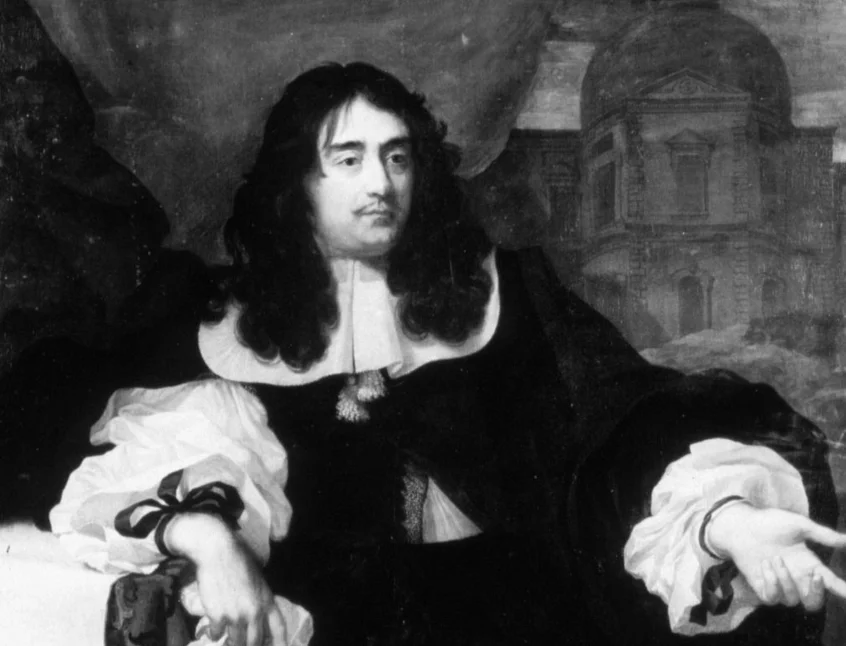
Portrait of Louis Le Vau
At Vaux, Le Vau did more than construct a château: he reimagined spatial design. He created a majestic central building, perfectly integrated into the gardens and natural surroundings, featuring sophisticated symmetry and novel perspectives. His close collaboration with André Le Nôtre and Charles Le Brun resulted in a total work of art — architecture, decoration, and landscape in perfect harmony.
The success of Vaux-le-Vicomte made a lasting impression — not least on Louis XIV, who was so struck by its beauty that he later appointed Le Vau to lead major projects at Versailles, the Louvre, and the Tuileries. In 1656, Le Vau was named Premier Architecte du Roi, a post he held until his death.
Though he left behind many celebrated works, Vaux-le-Vicomte remains one of his most personal creations — a place where, thanks to Fouquet’s trust and vision, he was free to fully express his architectural genius.
Charles Le Brun
The Genius of Decoration and Design
Charles Le Brun (1619–1690) is widely recognized as one of the greatest painters and decorators of the 17th century — and the chief visionary behind the visual identity of Vaux-le-Vicomte.
Born into a family of artists, Le Brun was trained in Paris before being sent to Rome in 1642 with a royal grant, under the patronage of Chancellor Séguier. That Roman experience proved pivotal: he studied Antiquity and Renaissance masters, and most importantly, met Nicolas Poussin, whose intellectual and moral vision of art would deeply influence his career.
Back in France, Le Brun quickly became one of the most sought-after artists of the realm. He was soon noticed by Nicolas Fouquet, who saw in him the perfect artist to magnify his château and elevate its splendor.
At Vaux-le-Vicomte, Le Brun designed the entire interior decor — from salons to galleries — and created its most iconic works. His frescoes, ceilings, and optical illusions celebrated both Fouquet’s power and mythological themes, blending politics with high art.
A visionary, Le Brun also helped craft the symbolic language that would shape Louis XIV’s court. Appointed Premier Peintre du Roi in 1664, he became director of the Royal Academy of Painting and Sculpture, and oversaw the decoration of royal residences such as Versailles — where he gave form to the aesthetics of absolute monarchy.
Though associated with many masterpieces, Vaux-le-Vicomte remains one of Le Brun’s boldest creations — a place where he freely expressed his classical heritage, Poussin’s rigor, and his own decorative genius in service of an equally ambitious patron.
André Le Nôtre
Master of the French Formal Garden
André Le Nôtre (1613–1700) is one of the greatest landscape architects in history. His work at Vaux-le-Vicomte exemplifies the pinnacle of the French formal garden.
The son of a royal gardener, Le Nôtre stood out early for his profound understanding of land and space, and his ability to turn a site into a living work of art. Eager to create gardens worthy of his château’s magnificence, Nicolas Fouquet called upon Le Nôtre to transform the grounds of Vaux into an earthly paradise.
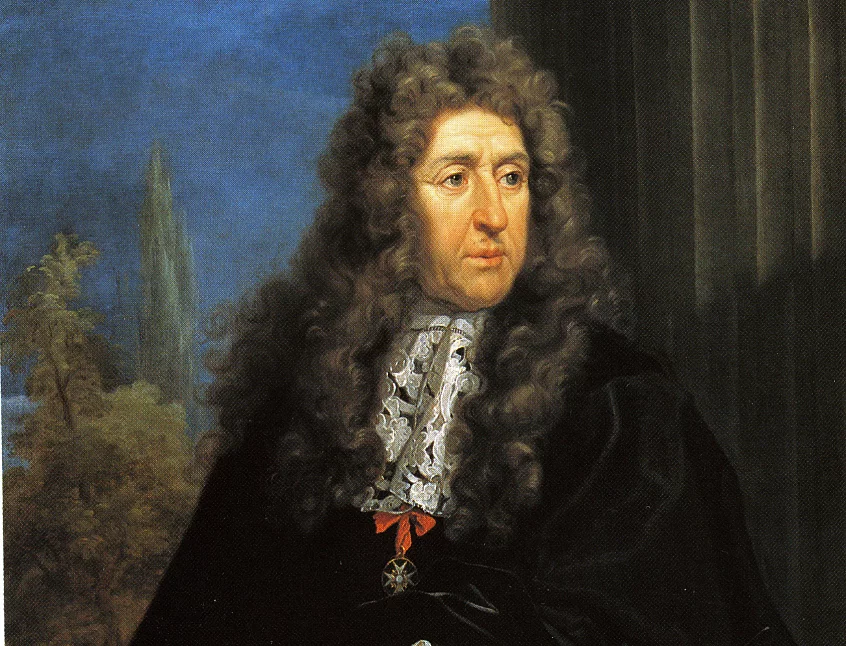
Portrait of André Le Nôtre
At Vaux-le-Vicomte, Le Nôtre reinvented the classical garden, combining strict symmetry, perspective, and water features. The grand parterres, basins, and canals became models throughout Europe. His work with sightlines and pathways created a perfect dialogue between the château’s architecture and the natural landscape. He captured space and opened it into infinite vistas, guiding the visitor’s eye through the garden’s orchestrated beauty.
Later named Premier Jardinier du Roi by Louis XIV, Le Nôtre’s designs at Versailles and the Tuileries set the standard worldwide. Yet it is at Vaux-le-Vicomte that his landscape genius was most fully revealed.
Molière
Comic Genius in the Service of Splendor
Molière (1622–1673), born Jean-Baptiste Poquelin, is the most celebrated comic playwright of the 17th century and a cornerstone of French culture. As an author, actor, and director, he revolutionized theater by blending humor, social critique, and psychological insight.
Educated at the Collège de Clermont in Paris, Molière devoted himself early on to the stage. In 1643, he founded L’Illustre Théâtre, then toured the French provinces for over a decade with his troupe.
Upon returning to Paris, he earned the protection of Louis XIV in 1658, who admired his wit and daring.
Nicolas Fouquet, a devoted patron of the arts, invited Molière to perform at Vaux-le-Vicomte, where he presented L’École des maris in an exclusive private showing.
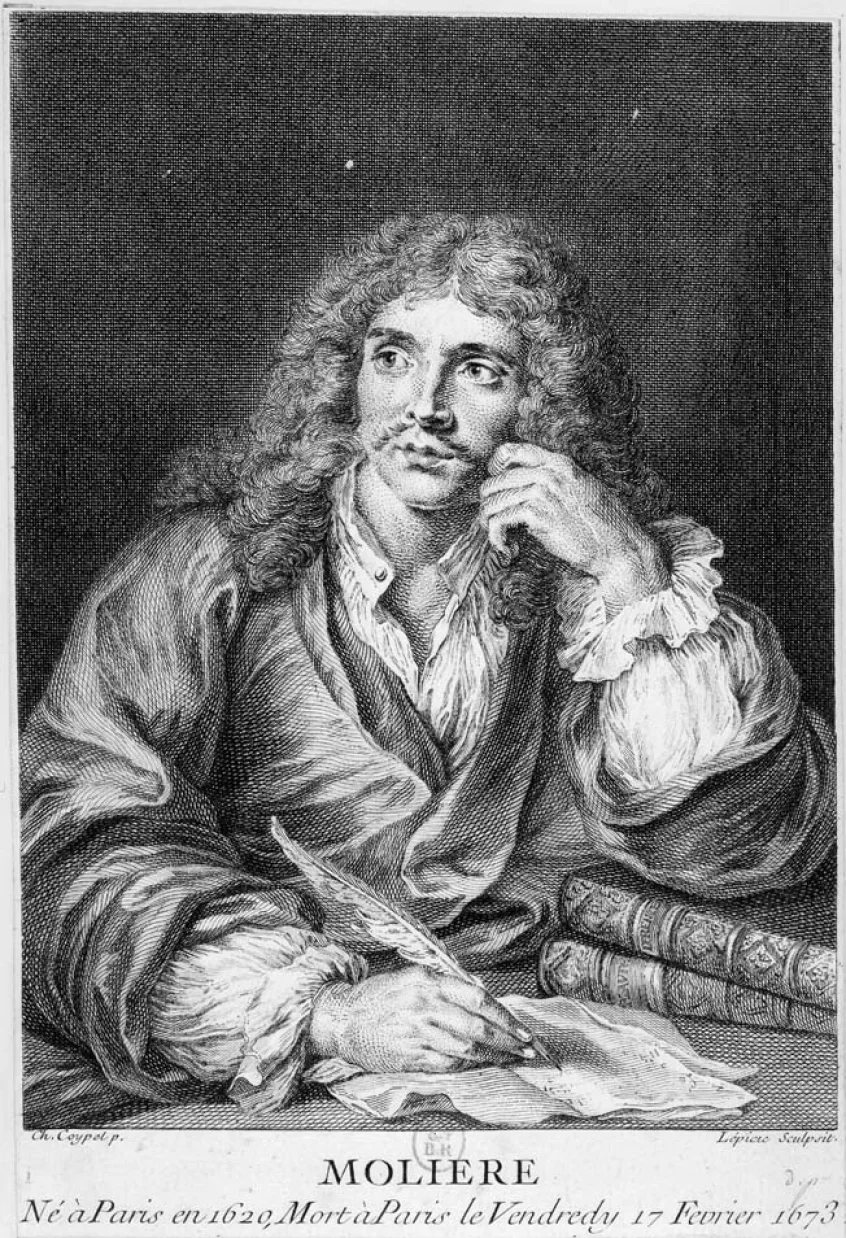
Portrait of Molière
On August 17, 1661, during the legendary fête in honor of Louis XIV, Molière premiered an original play: Les Fâcheux, the first comédie-ballet in history. Created in collaboration with choreographer Beauchamp and composer Lully, and written in just a few days, the open-air performance in Vaux’s illuminated gardens marked the birth of a new genre blending theater, dance, and music — a format the King would go on to champion.
Despite Fouquet’s fall, Louis XIV continued to support Molière and granted him the use of the Palais-Royal theater in Paris. His masterpieces — from Tartuffe to Le Malade Imaginaire — would earn enduring acclaim across France.
Molière died on stage in 1673, true to his art. But his time at Vaux-le-Vicomte remains a turning point in his career and a landmark in French theatrical history — the moment when comic brilliance met the grandeur of a visionary setting.
Jean de La Fontaine
The Loyal Companion
Among the illustrious figures who surrounded Nicolas Fouquet, Jean de La Fontaine holds a special place. Born in 1621, the writer — famed for his Fables — was one of the Superintendent’s most devoted protégés. It was thanks to Fouquet’s generosity and foresight that La Fontaine’s literary career truly took flight.
In 1658, he entered Fouquet’s service, composing poems, occasional pieces, and eulogies in his honor. One of his earliest major works, Le Songe de Vaux, is an ode to the estate’s splendor — celebrating the gardens’ beauty, the château’s magnificence, and the enlightened spirit of its owner. The piece reveals the poet’s deep admiration for his patron.
When Fouquet was arrested in 1661 on orders from Louis XIV, La Fontaine did not remain silent. He penned Élégie aux nymphes de Vaux, a poignant lament mourning his protector’s downfall. This rare act of loyalty — at a time when most at court distanced themselves — would have lasting consequences for La Fontaine’s reputation.
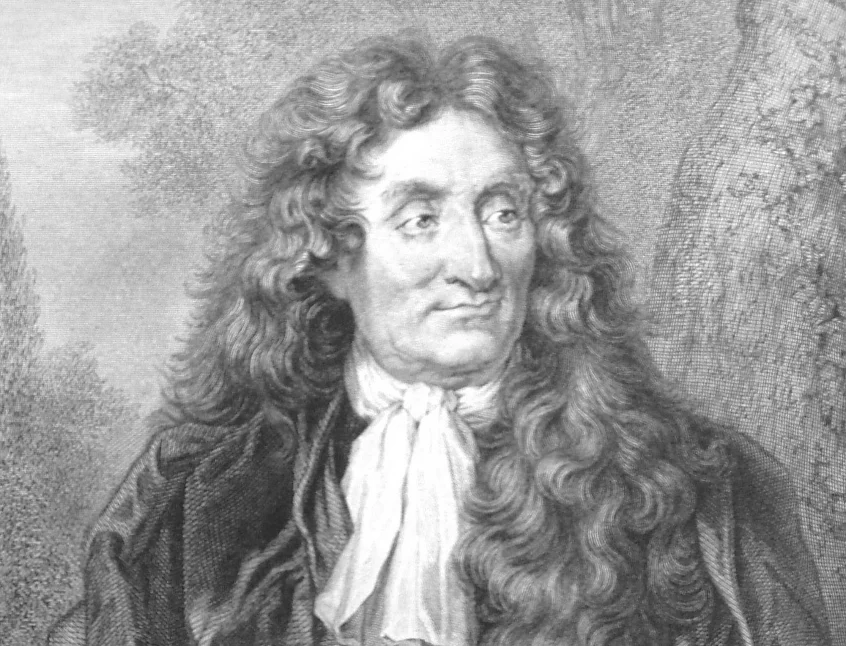
Portrait of Jean de La Fontaine
His unwavering fidelity to Fouquet cost him dearly: it closed many doors at court and delayed his official recognition. Yet La Fontaine never renounced his allegiance, remaining loyal to Fouquet’s memory throughout his life.
To this day, his words echo through Vaux-le-Vicomte, reminding us that the château was not just an architectural marvel, but also a haven of inspiration for the artists and writers of the Grand Siècle — a place where creativity and loyalty found a noble refuge.